


SACRAMENTO: The Air Resources Board and the Bureau of
Automotive Repair are jointly sponsoring legislation that is
projected to save consumers money, save time and provide greater
air quality from the state’s Smog Check program, which is
administered by BAR.
Addressing challenges raised by a recent analysis of smog check,
Assembly Member Mike Eng (D-Monterey Park) introduced AB 2289
that will provide faster and cheaper service to more than 70
percent of vehicles in California. The bill also directs older,
high emitting vehicles to the highest performing stations.
"The Smog Check program is one of the most important air quality
programs that we have to meet state and federal air quality
standards," stated Assemblymember Mike Eng. "AB 2289 is designed
to improve the program in reducing pollution through the use of
new technologies that provide considerable time and cost savings
to consumers while at the same time improving consumer
protections by adopting more stringent fine structures to respond
to station and technicians that perform improper and incomplete
inspections."
“If signed, this bill will allow a major upgrade in the
technologies used to test vehicle emissions,” said BAR Chief
Sherry Mehl. “It will result in cleaner air and has the potential
to reduce the cost of a Smog Check for many consumers, as well as
reduce the time spent by consumers getting their vehicles
inspected.”
“This new and improved program will have the same result as
taking 800,000 old cars off the road, also resulting in a more
cost effective program for California motorists,” said ARB
Chairman, Mary D. Nichols. “Today’s announcement will add
additional improvements to one of our most effective programs in
our fight for clean air, capturing up to 70 tons-per-day of
smog-forming emissions.”
One way the program would reduce costs is by taking advantage of
on-board diagnostic technology installed in all new vehicles
since 1996. The program will now take better advantage of OBD
technology by eliminating tailpipe testing and instead using the
vehicle’s own emissions monitoring system. This system has saved
consumers time and money in 22 other states.
The recent statewide audit of the Smog Check program revealed
that 19 percent of vehicles that initially passed testing failed
subsequent roadside tests within a short period of time. The
audit can be found at
http://www.arb.ca.gov/msprog/smogcheck/smogcheck.htm.
Reacting to these findings Assembly Member Eng designed
legislation that includes the following:
• Authorize the use of On Board Diagnostic II testing to
expedite the process;
• Vehicles known to release large amounts of pollution must
test at stations with the highest performance ratings;
• Stricter fines structure for improper inspections;
• Permit the state to contract with the private sector to
manage franchise-like networks of independently owned Smog Check
stations;
• Mandate an annual evaluation of station performance using
roadside tests; and,
• Encourage community colleges and other training
institutions to develop technician-training programs.
California’s Smog Check program, administered by the Bureau of
Automotive Repair, began in 1984 to identify vehicles in need of
maintenance and to assure the effectiveness of their emission
control systems on a biennial basis. Currently, Smog Check cuts
400 tons of smog-forming emissions from California’s air each
day.
The Air Resources Board is a department of the California
Environmental Protection Agency. ARB’s mission is to promote and
protect public health, welfare, and ecological resources through
effective reduction of air pollutants while recognizing and
considering effects on the economy. The ARB oversees all air
pollution control efforts in California to attain and maintain
health based air quality standards.
The Bureau of Automotive Repair licenses auto repair facilities
to protect consumers and administers the Smog Check program to
reduce auto emissions that cause air pollution. Consumers who
have a problem with an auto repair facility can file a complaint
with the Bureau of Automotive Repair by calling 1-800-952-5210.
Consumers can also file complaints online at BAR’s Web site at
www.autorepair.ca.gov.
The Air Resources Board is a department of the California
Environmental Protection Agency. ARB’s mission is to promote and
protect public health, welfare, and ecological resources through
effective reduction of air pollutants while recognizing and
considering effects on the economy. The ARB oversees all air
pollution control efforts in California to attain and maintain
health based air quality standards.
Tuesday, February 23, 2010
Smog Check program legislation aims for clean air benefits, lower costs, conveniences

Tuesday, January 5, 2010
New Year brings improved small containers for do-it-yourself automobile refrigerant
Self-sealing containers reduce emissions of potent greenhouse
gas
SACRAMENTO: This New Year, California’s home-based mechanics
will see changes to small containers of R-134a, a compound used
to recharge automobile air-conditioning systems and a potent
greenhouse gas.
The new requirements, adopted by the Air Resources Board to
comply with AB 32, California’s Global Warming Solutions Act of
2006, are expected to eliminate over 250,000 metric tons of
carbon-dioxide equivalents in 2020. The gas in these small
containers, R-134a, is 1,300 times more powerful than carbon
dioxide in trapping heat from the sun in the atmosphere, in turn
contributing to climate change.
“This is an excellent example of how regulations can be crafted
with full cooperation of the industry,” said ARB Chairman Mary D.
Nichols. “As a result, do-it-yourselfers will continue to have an
affordable product to recharge their car’s air conditioners but
with fewer emissions of potent greenhouse gases.”
The regulation, one of a series of so-called discrete early
action measures under AB 32 has four major components:
* Better container technology: a self-sealing valve on all
small containers of automotive refrigerant sold in California to
prevent emissions of any product remaining in a used container;
* Improved instructions for use;
* A new industry-run container deposit and recycling program
to ensure the recovery of refrigerant remaining in a used can;
* A manufacturer-developed education program so consumers
can use the best techniques for recharging an air conditioner.
Consumers of the do-it-yourself cans of automotive refrigerant
should begin to see cans on the shelf that meet the new
requirements as existing inventory is sold and restocked over the
next few months.
AB 32, California's Global Warming Solutions Act of 2006, was
signed into law by Governor Schwarzenegger in September 2006 and
calls on California to reduce its greenhouse gas emissions to
1990 levels by 2020.
The Air Resources Board is a department of the California
Environmental Protection Agency. ARB's mission is to promote and
protect public health, welfare, and ecological resources through
effective reduction of air pollutants while recognizing and
considering effects on the economy. The ARB oversees all air
pollution control efforts in California to attain and maintain
health based air quality standards.
Thursday, December 17, 2009
Target Corporation fined $500,000 for clean air violations

Retailer resisted cooperating with enforcement officers and was
subject to a stipulated judgment
SACRAMENTO: The Air Resources Board has fined Target Corporation
$500,000 for selling multiple products throughout California
between 2006 and 2008 that do not comply with the state's clean
air regulations.
ARB enforcement officers found that the retail chain had
marketed, sold, supplied and contracted with companies to provide
quantities of several non-compliant products to California's
market including: portable generators, portable fuel containers,
automotive windshield washer fluid and liquid air fresheners.
"ARB worked with manufacturers to design products that pollute
less," said ARB Chairman Mary D. Nichols. "Retailers have a
responsibility to ensure the products they offer are legal for
sale in California."
Initially, Target was found to be selling non-compliant
windshield washer fluid. California regulations establish a
maximum level of volatile organic compounds in windshield-washer
fluid, and all chemically formulated products because VOCs
contribute to ground level ozone.
Further investigation found that the manufacturer had warned
Target several times that the product was not formulated for sale
in warmer portions of California. Target continued to sell the
product even after state representatives notified the company of
the violations and pending enforcement actions. Further
investigation discovered sales of other non-compliant products,
including numerous Target branded reed-diffuser air fresheners.
ARB referred the case to California Attorney General's office in
September 2008. The stipulated settlement was ultimately
finalized in October of 2009.
California requires reduced VOC emissions from consumer products
as a means to reach state and federal ambient ozone standards.
Ozone is the main constituent of smog, a threat to human health
and the focus of decades of regulations aimed at reducing air
pollution. Exposure to ozone can cause lung inflammation,
impaired breathing, coughing, chest tightness, shortness of
breath and worsening of asthma symptoms.
VOCs are also emitted from portable fuel containers. In 1999,
the state addressed these by requiring manufacturers to engineer
canisters with tight controls. The new canisters eliminate fumes
that leak through container walls and, to reduce spillage,
include a mechanism that seals the spigot when not in use.
Portable generators have strict emission requirements focusing
on exhaust.
Efforts over the last 20 years to clean California's air have
led to a 38% drop in statewide ozone levels.
The Air Resources Board is a department of the California
Environmental Protection Agency. ARB's mission is to promote and
protect public health, welfare, and ecological resources through
effective reduction of air pollutants while recognizing and
considering effects on the economy. The ARB oversees all air
pollution control efforts in California to attain and maintain
health based air quality standards.
Source : http://www.arb.ca.gov/
Thursday, December 10, 2009
ARB calls for new health report, directs staff to explore regulatory flexibility for small businesses on diesel truck rule
SACRAMENTO: The Air Resources Board directed its staff today to
return to the Board next April with a new provision that would
provide truck fleets more flexibility in cleaning up their diesel
emissions under the state's Truck and Bus Rule that was adopted
in December of last year, in light of the recession's effect on
the industry.
ARB staff demonstrated that the down economy has reduced the
amount of time trucks have operated, thus reducing harmful diesel
emissions that would have occurred during normal economic times.
The Board also directed staff to withdraw and redo the health
report that carried Hien Tran's name since it was learned last
year that he falsely claimed he held a PhD in statistics from UC
Davis. The implementation of the rule will continue to be carried
out during this period.
The Board also neglected to second a motion by Board Members
John Telles, who wanted to repeal the diesel rule after learning
of a Tran's misconduct.
"With today's set of actions, we confidently set out to
revalidate the science supporting our rules and set up a process
to allow for more flexibility for small businesses in the
regulation given the down economy," ARB Chairman Mary D. Nichols
said. "We take the employee misconduct very seriously but it
should not affect an extremely important public health measure
that has been extensively reviewed throughout the scientific
community. We have tightened up our procedures to ensure an
incident like this never happens again."
ARB passed the diesel truck and bus rule last December that
requires truck owners to install diesel exhaust filters on their
rigs by Jan. 1, 2011, with nearly all vehicles upgraded by 2014.
The regulation is estimated to prevent 9,400 premature deaths
over its lifetime.
To reduce diesel emissions and improve air quality and public
health, the ARB adopted a Diesel Risk Reduction Plan in 2000 and
has already passed regulations addressing urban buses, garbage
trucks, school bus and truck idling, stationary engines,
transport refrigeration units, cargo handling equipment at ports
and rail yards, off-road vehicles, port trucks and other
sources.
For more information on the Statewide Bus and Truck Regulation,
go here:
http://www.arb.ca.gov/regact/2008/truckbus08/truckbus08.htm .
The Air Resources Board is a department of the California
Environmental Protection Agency. ARB's mission is to promote and
protect public health, welfare, and ecological resources through
effective reduction of air pollutants while recognizing and
considering effects on the economy. The ARB oversees all air
pollution control efforts in California to attain and maintain
health based air quality standards.
Monday, October 12, 2009
City of Ventura fined $8,500 for emissions violations
SACRAMENTO – The California Air Resources Board fined the city of San Buenaventura, also known as Ventura, this month $8,500 for diesel emissions violations that occurred in 2006 and 2007. An ARB investigator found that the city had not conducted annual inspections on some of its heavy-duty on-road diesel vehicles. Failing to conduct these inspections can lead to an increase of toxic air contaminants and diesel particulate matter in the air. “California has long been stigmatized for its poor air quality,” said ARB Enforcement Chief James Ryden. “When cities do not comply with clean air rules they are only adding to the problem.” The law requires owners of California-registered truck fleets to regularly inspect their vehicles to ensure that their engine emissions meet state air quality standards. As part of the settlement, the city is required to: • Guarantee employees responsible for conducting the inspections attend a mandatory California community college class on diesel emissions and provide certificates of completion within one year; • Provide documentation to ARB that the inspections are being carried out for the next four years; • Instruct vehicle operators to comply with the state’s idling regulations; • Revise all heavy-duty truck engine software with the latest low-NOx (oxides of nitrogen emissions) programming; and, • Ensure that all diesel trucks are up to federal emissions standards for the vehicle model year and are properly labeled with an emission control label. The city of San Buenaventura paid $8,500 in penalties: $6,375 went to the California Air Pollution Control Fund, providing funding for projects and research to improve California’s air quality. The Peralta Community College District received $1,062.50 to fund emissions education classes conducted by participating California community colleges. The remaining $1,062.50 went to the California Pollution Control Financing Authority to fund low-interest loans for owners of off-road diesel-powered construction vehicles. Diesel exhaust contains a variety of harmful gases and over 40 other known cancer-causing compounds. In 1998, California identified diesel particulate matter as a toxic air contaminant based on its potential to cause cancer, premature death, and other health problems. The Air Resources Board is a department of the California Environmental Protection Agency. ARB’s mission is to promote and protect public health, welfare, and ecological resources through effective reduction of air pollutants while recognizing and considering effects on the economy. The ARB oversees all air pollution control efforts in California to attain and maintain health based air quality standards.
Wednesday, September 16, 2009
ARB fines marketers of gasoline-powered blenders $240K
%5B3%5D.jpg "Gas Powered Party Blender (2 Stroke Engine)")
Tuesday, September 8, 2009
Valspar fined $218,000 for consumer products violations
SACRAMENTO – The California Air Resources Board last month fined
paint and coatings giant Valspar Corp. $218,000 for violating
clean-air regulations between 2007 and 2008.
ARB investigators found that Minneapolis-based Valspar sold,
supplied or manufactured for sale three consumer product lines
that exceeded California standards for volatile organic
compounds, including the well-known ‘Goof Off’ adhesive remover.
“Smog is still a serious health concern in California,” said ARB
Chairman Mary D. Nichols. “Consumer products contribute to our
air pollution problems and our enforcement teams are on the
lookout for violators.”
Valspar fully cooperated with the ARB investigation. Their
violations include:
• 42,012 units of ‘Goof Off The Ultimate Remover,’ a general
purpose adhesive remover, exceeded the 20 percent VOC limit;
• 7,006 units of ‘Goof Off Graffiti Remover’ exceeded the 50
percent VOC limit; and,
• 4,555 units of ‘AFTA Adhesive Remover Cleaning Solvent,’ a
general degreaser, exceeded the 4 percent VOC limit.
Valspar no longer owns the ‘Goof Off’ product line and stopped
selling the AFTA product in California.
The company will pay $218,000 in penalties to the California Air
Pollution Control Fund for projects and research to improve
California’s air quality.
VOCs are building blocks that help create ground-level ozone, or
smog. Smog can damage lungs, cause coughing and chest tightness,
and worsen asthma symptoms while also affecting crop yields. It
is particularly harmful to children, the elderly and those who
have preexisting health problems.
The Air Resources Board is a department of the California
Environmental Protection Agency. ARB’s mission is to promote and
protect public health, welfare, and ecological resources through
effective reduction of air pollutants while recognizing and
considering effects on the economy. The ARB oversees all air
pollution control efforts in California to attain and maintain
health based air quality standards.
Tuesday, September 1, 2009
South state motorcycle dealers pay $180,000 in penalties
Illegal sales put public health and safety at risk

SACRAMENTO -- The California Air Resources Board last month
fined two San Diego-area motorcycle dealers $180,000 for illegal
sales.
In 2006, ARB enforcement officers got an anonymous tip that San
Diego-based GP Motorcycles and Moto Forza of Escondido, Calif.,
were illegally selling Husqvarna off-road motorcycles as on-road
models. ARB investigators confirmed the allegations and took
action.
“Companies that deliberately flout the law are often assessed
higher penalties,” said ARB Chairman Mary D. Nichols. “Playing
by the rules from the start is the most cost-effective, smart
business plan any company can follow.”
GP Motorcycles and Moto Forza sold several dozen off-road
motorcycles to customers who thought they were purchasing on-road
models. Many of the bikes were outfitted with so-called
“street-legal” kits and licensed for on-road use, both illegal in
California.
ARB revoked all the on-road licenses and registrations for the
illegal bikes sold by GP Motorcycles and Moto Forza. The
motorcycle owners were permitted to return their license plates
to the Dept. of Motor Vehicles for the appropriate off-road
riding stickers and plates.
Off-highway vehicles do not meet federal motor vehicle safety
standards -- or ARB’s emission standards -- required of on-road
motorcycles. There are no street-legal kits or conversions that
make an off-road motorcycle legal for on-road use or
registration. A motorcycle is either certified by ARB for on-road
use or off-road use.
California's air pollution control efforts include regulating
emissions from cars, trucks, buses and motorcycles. Smog can
damage lungs, cause coughing and chest tightness, and worsen
asthma symptoms while also affecting crop yields.
The Air Resources Board is a department of the California
Environmental Protection Agency. ARB’s mission is to promote and
protect public health, welfare, and ecological resources through
effective reduction of air pollutants while recognizing and
considering effects on the economy. The ARB oversees all air
pollution control efforts in California to attain and maintain
health based air quality standards.
Sunbelt Rentals fined $98,500 for emissions violations
Sunbelt Rentals fined $98,500 for emissions violations
SACRAMENTO – The California Air Resources Board last week fined
Sunbelt Rentals $98,500 for emissions violations in 2007 and 2008
around the state.
During a routine investigation, ARB investigators found that
Sunbelt Rentals, headquartered in Fort Mill, S.C., failed to
conduct diesel truck smoke tests in 2007 and 2008 at 20 of its
California fleet facilities.
“Californians depend on clean air as part of living a healthy
life,” said ARB Chairman Mary D. Nichols. “When companies
violate air quality laws, we all lose.”
Under the penalty, Sunbelt Rentals must:
• Ensure that staff responsible for compliance with the diesel
truck emission inspection program attend California community
college diesel emissions education courses and provide
certificates of completion within one year, or provide proof that
any contractor used to do the annual smoke tests has taken this
course within the last four years;
• Complete heavy-duty diesel engine software and control
technology upgrades in compliance with regulations;
• Comply with the ARB’s anti-idling regulations and all other
applicable regulations;
• Supply all smoke inspection records to ARB for the next four
years; and,
• Properly label engines to ensure compliance with the engine
emissions certification program regulations.
The company will pay $98,500 in penalties: $73,875 will go to
the California Air Pollution Control Fund, which provides funding
for projects and research to improve California s air quality;
$12,312.50 to Peralta Community College District to fund emission
education classes; and, the remaining $12,312.50 to the
California Pollution Control Financing Authority to guarantee low
interest loans for fleets purchasing diesel exhaust retrofits or
new engines or vehicles..
Failure to inspect diesel vehicles can lead to an increase in
harmful airborne particles that Californians breathe. Over a
decade ago, the ARB listed diesel particulate matter as a toxic
air contaminant in order to protect public health. Exposure to
unsafe levels of diesel emissions can increase the risk of
asthma, bronchitis and other respiratory diseases.
The Air Resources Board is a department of the California
Environmental Protection Agency. ARB’s mission is to promote and
protect public health, welfare, and ecological resources through
effective reduction of air pollutants while recognizing and
considering effects on the economy. The ARB oversees all air
pollution control efforts in California to attain and maintain
health based air quality standards.
Saturday, August 8, 2009
Importation and Legalization of Automobiles to the United States.

This was written several years ago. Before there was a US Department of Homeland Security.
There is too much misinformation out there about the actual importation and legalization process . The actual process requires the satisfaction of several government agencies . The government agencies concerned are :
1) NHTSA (National Highway Traffic Safety Administration) or DOT (Department of Transportation)
2) EPA (Environmental Protection Agency)
3) Customs Service.( Part of Homeland Security now)
4) CARB ( California Air Resources Board) if you are in California.
5) Local Department of Motor Vehicles.
There is a lot of information about importation of vehicles . It is a little difficult to transfer several years of knowledge and experience into a few lines of information. The truest way to learn the information is though doing it and from reading the Code of Federal Regulations , along with the local laws and information.
1)My state doesn't have emissions testing , so is it any cheaper to legalize my vehicle ?
No , its not any cheaper as the vehicle , and every vehicle when first sold new must meet Federal Emissions Standards . If your state does not have emissions standards , that does not mean you , or your state does not meet them . It merely means there is no in use testing. Federal emissions standards are FTP testing. It is run on a dyno from a cold start . Though an 11 mile drive cycle. All of the emissions from a vehicle are tested , and the vehicle must meet certain criteria for the year it was produced .
2) I want to bring in a Toyota Supra from Japan (any vehicle not produced for the US market) , I have seen people have them here already , why do you say I can't have the car ?
"All eligibility numbers are for left-hand drive motor vehicles except where right-hand drive (RHD) is identified after the model. While there is no specific restriction on importing a right-hand drive vehicle, an eligibility number based on a substantially similar U.S.- certified motor vehicle may not apply. Our experience has shown that the safety performance of right-hand drive vehicles is not necessarily the same as that of apparently similar left-hand drive vehicles offered for sale in this country. However, we will consider them "substantially similar" if the manufacturer advises us that the right-hand drive vehicle would perform the same as the certified left-hand drive vehicle in crash tests. If the vehicle is not substantially similar to one sold in the U.S., the RI would have to demonstrate that the vehicle, when modified, would comply with the applicable Federal motor vehicle safety standards, which could involve crash testing several vehicles. " from the DOT website.
3) What is FTP ?
Federal Test Procedure, or FTP means the test procedure as described in Sec. 86.130-00 (a) through (d) and (f) which is designed to measure urban driving tail pipe exhaust emissions and evaporative emissions over the Urban Dynamometer Driving Schedule as described in appendix I to this part.
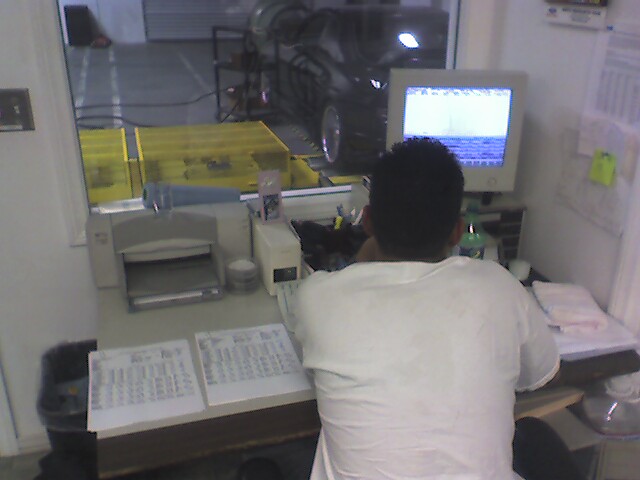
4) What is the DOT ?
Department of Transportation . Mostly we are concerned with the NHTSA . National Highway Transportation Safety Administration . OVSC . Office of Vehicle Safety and Compliance
5) What is FMVSS ?
Federal Motor Vehicle Safety Standards
6) What is EPA ?
Environmental Protection Agency
7) What is CARB ?
California Air Resources Board.
8) What does the customs service do ?
9)Whats an HS-7 ?
It is the DOT form required to import a vehicle
10) What is a 3520 -1 ?
Its the EPA form required to import a motor vehicle. 3520-1

11) What is Show or Display exemption ?
http://www.nhtsa.dot.gov/cars/rules/import/ShowDisplay/
12) I want to import a race car how do I do it ?
There are two ways to import a race car .
- Temporary
- Permanent
http://www.nhtsa.dot.gov/cars/rules/import/Racing/Index.html

13) I want to do the work myself , why can't I ?
Registered importers are supposed to perform all modifications as the modifications are covered by safety recall insurance . If the RI did not perform the modifications there is no way for them to ensure the modifications are done correctly.
14) Why do you care if I import a car and sell it ?
If this guy sells it to someone , without the person fully knowing about the car they may have some problems .
The only person that has something actually to lose is the guy that buys this car . If I can use some of my knowledge about this , to possibly help someone out , then I will .
Does anyone remember the call I got from the guy with a Skyline in Canada . Someone had told him that he could import the car to Canada . Then drive it for a year before he had to legalize it . Have to tell him that there is really not much I could do for him . I gave him his options . He didn't think he was doing anything wrong . But hes the guy that gets screwed.
15) What do you know about the petition process for vehicles at the DOT ?
http://dms.dot.gov/search/searchFormSimple.cfm
Do a keyword search . Search for Lancer Evolution . You will see two 87 page documents from me for the LHD Mitsubishi Lancer Evolution VII and VIII . The first few pages are the actual work . The rest of the pages are substantiating documentation from Mitsubishi press releases , and service manuals.It took me about a month to do the Mitsubishi petition . Get the paperwork and information together . Do the research , etc .
In February , 2003 I flew over to the DOT in Washington , DC and dropped off my petition . At first I bundled the VII and VIII together as they are on the same chassis CT9A . The DOT did not like this , and I had to go and split it into two petitions .
It took about 2 months for them to decide they wanted to see it different . Then took several more months before they published the VIII petition in the Federal Register . Another month to publish the VII petition . Comments from Mitsubishi on the VII delayed the closing of the petition a week. There are comments from Mitsubishi on the VII petition also.The week after Mitsubishis comments I called the DOT to find out if they wanted me to formally comment on Mitsubishis comments , and they told me to stand by. Its been about 3 weeks now , and I am standing by. In all its been 11 months since I started the project .11 months. Sure in that time , everyone in the DOT has changed , some rules have changed .
In the end, Mitsubishi kept making challenges, and we kept responding. Their final challenge that really took the sails out of the project was the claim that the side impact structure of the European car, and the US car were different. We were set to X-Ray the side of the car, but the money ran out, and the project was shelved.
16) I hear 1996 and up cars need OBD -II . What is OBD -II ? Do cars made for other countries have it ?
http://www.obdiicsu.com/ No system was required by other countries until recently .
17) What about converting my car to run on propane, or other cleaner fuel ?
http://www.arb.ca.gov/msprog/aftermkt/aftermkt.htm#altfuel
Alternative Fuel Certified Retrofit Systems Under current California regulations, conversion of emission-controlled vehicles with retrofit systems to operate on alternative fuels, such as propane and natural gas, in lieu of the original gasoline or diesel fuel is only allowed if the retrofit systems have been evaluated and certified by the Air Resources Board. The certification must be obtained by the manufacturer of the retrofit system and is issued by the Air Resources Board once the manufacturer demonstrates compliance with the emission, warranty, and durability requirements. View a list of certified retrofit systems for 1994 and newer model-year vehicles. (Word97 - 56K) or (Acrobat - 110K)
18) Kit cars. I want to take a car apart and import it as a kit car. Is this legal ?
Motor vehicles" must comply with the Clean Air Act and may not be disassembled nor purchased in a disassembled form for the purposes of evading the Clean Air Act or the Imports regulations. In these situations the kit car body/chassis combination must be certified by the manufacturer, must be in a configuration which was previously certified by EPA subject to the guidelines discussed at "2" above or, in the case of an importation, an EPA form 3520-1 must be filed at the port of entry and the vehicle imported by an eligible ICI who must ensure that the kit car body/chassis complies with all applicable emission requirements. At the present time, there are no ICIs eligible to import kit cars.
Websites
Insurance Institute for Highway Safety crash test results -- http://www.hwysafety.org/vehicle_ratings/ratings.htm
Crash test data - Edmunds / NHTSA -
http://www.edmunds.com/ownership/safety/crashtestdata/ NCAP Offset Crash test results - >http://www1.tpgi.com.au/users/mpaine/ncaplist.html Code of Federal Regulations -
http://www.gpoaccess.gov/cfr/index.html Emissions Information - http://www.access.gpo.gov/nara/cfr/waisidx_02/40cfr86_02.htm Kit car titling in Illinois - http://rawilson.net/cobra/title.html
Wednesday, July 1, 2009
California adopts first-in-nation approach to keep cars cooler

New standards will block sun's heat-producing rays through
windows
SACRAMENTO- Today, the California Air Resources Board adopted a
regulation that will require new cars sold in California,
starting in 2012, to have windows that reflect or absorb
heat-producing rays from the sun. This will help keep cars
cooler, increase their fuel efficiency and reduce global warming
pollution.
Cooler cars mean less air conditioning thereby increasing fuel
efficiency and preventing about 700,000 metric tons of carbon
dioxide from entering the atmosphere in 2020 - roughly the
equivalent of taking 140,000 cars off the road for a year.
"This is a common-sense and cost-effective measure that will
help cool the cars we drive and fight global warming," said ARB
ChairmanMary D. Nichols. "It represents the kind of innovative
thinking we need to reduce greenhouse gas emissions from our
vehicles and steer our economy toward a low-carbon future.
A variety of new and currently available approaches will be used
to achieve the standards including adding chemicals to the glass
during manufacturing to absorb the sun's energy and using
laminated glass coated with invisible microscopic specks of metal
to reflect it. Windshields that comply with the standard will
continue to offer full visibility.
Compared to cars currently in showrooms, windows that comply
with the standard will block 33 percent more heat-producing rays
from the sun. This will cool the vehicle's interior by
approximately 14 degrees Fahrenheit for a car and 12 degrees
Fahrenheit for a pickup or SUV. Lower temperatures require less
use of air conditioning, both upon starting a car parked in the
sun and while driving in sunny conditions.
Other benefits include a cooler interior upon entering the car,
less time for the air conditioning to reach a comfortable
temperature, and reduced fading of upholstery and cracking of the
dashboard.
The regulation has two steps. Over a three-year period starting
in 2012 windows in new cars sold in California must prevent 45
percent of the sun's total heat-producing energy from entering
the car, with the windshield rejecting at least 50 percent of the
sun's energy.
In 2016 car manufacturers will be required to install windows in
new cars sold in California that prevent at least 60 percent of
the sun's heat-producing rays from entering the cars interior, or
propose alternative technologies to achieve an equivalent
result.
Costs for the windows are expected to average $70 for the 2012
standard, and about $250 for the 2016 standard, with annual
savings in gas of $16 and $20 respectively. Costs would be
recouped over a five to twelve year period.
This initiative follows on the heels of a series of other
measures adopted by the Board under AB 32 (NЗЯez, 2006),
California's pioneering climate change legislation, to reduce
greenhouse gas emissions from vehicles. These include a standard
for cleaner lower-carbon vehicle fuels, and a regulation to
ensure tire pressure is checked at smog check, oil change and
other maintenance facilities.
California is also awaiting approval of a waiver from the
federal government to enforce standards under its Clean Car Law
that will reduce greenhouse gas emissions 30 percent from
vehicles over the next seven years.
The Air Resources Board is a department of the California
Environmental Protection Agency. ARB's mission is to promote and
protect public health, welfare, and ecological resources through
effective reduction of air pollutants while recognizing and
considering effects on the economy. The ARB oversees all air
pollution control efforts in California to attain and maintain
health based air quality standards..
Starting today ocean-going ships off California's coast must use clean fuel
clean fuel
Requirement will reduce exhaust and annually prevent thousands
of premature deaths
SACRAMENTO: Beginning today, July 1, all ocean-going vessels
within 24 nautical miles of California's coastline must use
cleaner burning diesel fuel in order to comply with a new state
regulation aimed at reducing the emissions of oxides of sulfur
and nitrogen and diesel particulate matter, a known carcinogen.
The requirement, adopted in 2008, will annually affect nearly
2,000 ocean-going vessels, both U.S. flagged and foreign-flagged,
visiting California. The vessels will have to use lower-sulfur
marine distillates rather than the highly polluting heavy-fuel
oil often called bunker fuel.
"This comparatively simple switch for ships will have huge
benefits for Californians," said Air Resources Board Chairman
Mary D. Nichols. "People living along the coast will see benefits
overnight: cleaner air and better health."
Using the cleaner fuels will be phased in, but significant
emission reductions will be immediate. Initially, 13 tons-per-day
of toxic particulate matter emitted from the vessels' diesel
engines will be eliminated. Reductions will increase as the fuel
sulfur content is progressively lowered through the regulation's
phase-in.
Today's switch will eliminate about a 75 percent of the diesel
PM, over 80% of the sulfur oxides and 6 percent of the nitrogen
oxides. In 2012, when the very low sulfur fuel is required,
reductions of diesel particulate matter will be 15 tons daily, an
83 percent reduction compared to uncontrolled emissions. Sulfur
oxides will be reduced by 140 tons daily, a 95 percent reduction
and nitrogen oxides will be reduced by 11 tons per day, a 6
percent reduction.
Reducing ship exhaust will eliminate an estimated 3,600
premature deaths between 2009 and 2015 and lower the cancer risk
by over 80 percent. In addition, the emission reductions will
assist the South Coast Air Quality Management District meet its
2014 federal clean air requirements for fine particulate matter.
The reductions are also needed for ARB to achieve its targeted 85
percent reduction of diesel PM by 2020.
Air board representatives explain that the regulation is
extremely cost effective. The fuel is readily available and
complying with the regulation would typically add $30,000 to a
California port visit, roughly one percent of the typical fuel
costs for a vessel crossing the Pacific Ocean. The shipping
industry maintains that a typical voyage for a container vessel
from Asia to U.S. west coast costs a company two to three million
dollars. For a container ship with consumer products, this cost
increase equates to an extra 12.5 cents in the cost of a plasma
TV. For a cruise ship passenger, using industry's numbers, this
would add about $15 to a fare.
Diesel exhaust contains a variety of harmful gases and over 40
other known cancer-causing substances. Currently, diesel PM
emissions from ocean-going vessels expose over seven million
people in California to high cancer risk levels in excess of 100
in a million for lifetime exposures.
In 2000, the ARB developed its Diesel Risk Reduction Plan that
set the goal of cutting diesel emissions by 85 percent by 2020.
The plan includes a series of measures designed to achieve that
goal. As part of that plan the Board has adopted measures that
require the use of low sulfur diesel fuel in most applications
statewide, tighter tailpipe limits on in-use diesel trucks and
buses and to control emissions from port equipment and ships
operating in California waters.
Go to online version for a map showing California populations at
risk from uncontrolled emissions from ocean going vessels:
http://www.arb.ca.gov/newsrel/nr070109.htm
For more information on the new regulation covering vessels go
here: http://www.arb.ca.gov/ports/marinevess/marinevess.htm .
Thursday, May 14, 2009
Car dealership fined $175,000 for installing unapproved aftermarket part
dealership with outlets in North Hollywood and Fontana, $175,000
last month for illegally modifying 2005 through 2007 model year
light- and medium-duty vehicles with an aftermarket device before
the vehicles were sold.
The part, called a Fuel Maximizer, is intended to improve gas
mileage and performance in cars by changing the flow of air as it
mixes with the gasoline before combustion. Discovery of the
unapproved parts was made during a routine dealer inspection.
"We expect dealers to follow the law, which requires that
certified aftermarket parts only be installed after a vehicle is
sold," said ARB Chairman Mary D. Nichols. "Our air quality can
suffer when careless mistakes are made, so we hope this fine
sends a strong message."
It is illegal in the state of California to perform
modifications on a new car prior to sale. Modifying car engines
can increase harmful emissions and may lead to the vehicle
failing California's smog test.
Per the terms of the settlement, Sunrise Ford will pay a total
of $175,000 to the California Air Pollution Control Fund which
supports research and programs intended to reduce California's
carbon footprint.
California's air quality measures are in place to prevent
excessive emissions that can negatively affect public health.
Ozone, also known as urban smog, can cause difficulty breathing,
shortness of breath, coughs, heightened asthma rates,
cardiopulmonary ailments and premature deaths.
The Air Resources Board is a department of the California
Environmental Protection Agency. ARB's mission is to promote and
protect public health, welfare, and ecological resources through
effective reduction of air pollutants while recognizing and
considering effects on the economy. The ARB oversees all air
pollution control efforts in California to attain and maintain
health based air quality standards.
Thursday, April 16, 2009
Nissan Motor Co. fined $4.4 million
Automotive giant cited for failing to monitor car emissions
SACRAMENTO - The Air Resources Board last month fined Nissan
Motor Company $4.4 million for failing to meet requirements
concerning the diagnostic equipment that monitors tailpipe
emissions on most of its 2005-2007 models - more than 450,000
vehicles.
On-board diagnostic systems are incorporated into vehicle
computers to ensure tailpipe emissions stay at permissible
levels. If a problem is detected, the system turns on a "check
engine" light to alert the driver.
The ARB discovered Nissan's problems in 2007 during a routine
compliance review. The problems concerned inadequate monitoring
of engine sensors that govern proper fuel system operation and
whether monitoring takes place as frequently as required.
"California advanced the goal of clean air by pioneering the
development and use of the on-board diagnostic system to make
sure drivers know when their emissions equipment malfunctions,"
said ARB Chairman Mary D. Nichols. "We consider it to be a vital
tool not only for consumers, but for all of us who want to
breathe clean air..
"Nissan has been cooperative during this investigation, and we
are confident that the design process changes they implemented
will prevent future problems," Nichols added.
Nissan's settlement with the ARB requires it to pay $3 million
to the California Air Pollution Control Fund, which provides
funding for projects and research to improve California's air
quality. It must also pay $1.2 million to the Environmental
Education Initiative and $200,000 to the National OBD
Clearinghouse.
California has the nation's poorest air quality. Excess vehicle
emissions can cause or exacerbate a host of respiratory and
cardiac conditions and pose a danger to public health.
The Air Resources Board is a department of the California
Environmental Protection Agency. ARB's mission is to promote and
protect public health, welfare, and ecological resources through
effective reduction of air pollutants while recognizing and
considering effects on the economy. The ARB oversees all air
pollution control efforts in California to attain and maintain
health based air quality standards.
Thursday, March 12, 2009
California Reintroduces Bill to Require ANNUAL Emissions Tests for Vehicles 15-Years Old and Older
Here we go again! Legislation (A.B. 859) has been reintroduced in the California Assembly by Assemblyman Dave Jones (Assemblymember.jones@assembly.ca.gov) to require annual Smog check inspections for vehicles 15-years old and older. The bill would also require that funds generated through the additional inspection fees be deposited into an account which can be used to scrap older cars. You may recall that in 2004 a new law was enacted in California to require the lifetime testing of all 1976 and newer model-year vehicles. Pre-1976 motor vehicles would remain exempt under A.B. 859. The bill has been referred to the Assembly Transportation Committee.
We Urge You to Contact Assemblyman Jones and Members of the Assembly Transportation Committee (List Below) Immediately to Oppose A.B.
859
A.B. 859 ignores the minimal impact vintage cars have on air quality.
A.B. 859 could entice vintage car owners into allowing these vehicles to be scrapped.
A.B. 859 ignores the fact that vehicles 15-years old and older still constitute a small portion of the overall vehicle population and are a poor source from which to look for emissions reduction.
A.B. 859 ignores the fact that classic vehicles are overwhelmingly well-maintained and infrequently driven.
A.B. 859 would increase costs by creating an annual inspection fee for owners of these vehicles.
A.B. 859 represents another attempt by California legislators and regulators to scapegoat older cars.
Please contact members of the California Assembly Transportation Committee immediately by phone, fax or e-mail to request their opposition to A.B. 859.
Please e-mail a copy of your letter to stevem@sema.org. Thank you for your assistance.
Assembly Transportation Committee
Click here to e-mail all Committee members.
Assemblymember Mike Eng – Chair
Phone: 916/319-2049
Email: Assemblymember.Eng@asm.ca.gov
Assemblymember Kevin Jeffries
Phone: 916/319-2066
Email: Assemblymember.Jeffries@assembly.ca.gov
Assemblymember Bob Blumenfield
Phone: 916/319-2040
Email: Assemblymember.Blumenfield@assembly.ca.gov
Assemblymember Joan Buchanan
Phone: 916/319-2015
Email: Assemblymember.Buchanan@assembly.ca.gov
Assemblymember Connie Conway
Phone: 916/319-2034
Email: Assemblymember.Conway@assembly.ca.gov
Assemblymember Warren Furutani
Phone: 916/319-2055
Email: Assemblymember.Furutani@assembly.ca.gov
Assemblymember Cathleen Galgiani
Phone: 916/319-2017
Email: Assemblymember.Galgiani@assembly.ca.gov
Assemblymember Martin Garrick
Phone: 916/319-2074
Email: Assemblymember.Garrick@assembly.ca.gov
Assemblymember Bonnie Lowenthal
Phone: 916/319-2054
Email: Assemblymember.Lowenthal@assembly.ca.gov
Assemblymember Jeff Miller
Phone: 916/319-2071
Email: Assemblymember.Miller@assembly.ca.gov
Assemblymember Roger Niello
Phone: 916/319-2005
Email: Assemblymember.niello@assembly.ca.gov
Assemblymember John Perez
Phone: 916/319-2046
Email: Assemblymember.John.Perez@assembly.ca.gov
Assemblymember Jose Solorio
Phone: 916/319-2069
Email: Assemblymember.solorio@assembly.ca.gov
Assemblymember Tom Torlakson
Phone: 916/319-2011
Email: Assemblymember.Torlakson@assembly.ca.gov
Friday, January 9, 2009
Auto supply company fined $600,000
Products sold did not comply with state air quality
requirements
SACRAMENTO: The Air Resources Board has fined CSK Auto, Inc.
$600,000 for selling windshield washer fluid throughout the state
that does not comply with the state's clean air regulations.
CSK Auto, Inc, is headquartered in Phoenix AZ and is parent
company of several west coast automobile supply retail outlets,
including California's Kragen Auto Parts, where the violations
were found. ARB cited the chain for selling windshield fluid
throughout California that was specially formulated with higher
pollutants to prevent from freezing in the state's colder,
mountainous areas.
"Manufacturers of a wide variety of automotive and other
consumer products are subject to California's strict air
pollution requirements," said ARB Chairman Mary Nichols. "And we
depend on retailers to stock only those products that meet our
clean air goals."
Through routine monitoring, ARB enforcement officials discovered
that CSK was selling windshield washer fluids and deicers that
exceed limits of volatile organic compounds. Through the years of
2004 and 2006 more than 14,000 gallons of non-complying products
were sold.
ARB has worked with the consumer product industry for many years
to strictly control the VOC content in consumer products as VOCs
contribute to the creation of ground level ozone. Ozone is
caustic and irritates nasal passages and lung tissue, creating a
serious problem for people with cardio-pulmonary diseases such as
asthma and chronic pulmonary obstructive disorder.
The penalties were paid directly to the California Air Pollution
Control Fund which uses the money to reduce air pollution through
a variety of programs.
Limiting the amount of VOCs in products has reduced the number
of high ozone days throughout California. This is especially
important in all of California's major air districts as they
still fail to meet federal health standards for ozone.
The Air Resources Board is a department of the California
Environmental Protection Agency. ARB's mission is to promote and
protect public health, welfare, and ecological resources through
effective reduction of air pollutants while recognizing and
considering effects on the economy. The ARB oversees all air
pollution control efforts in California to attain and maintain
health based air quality standards.
ARB likes fining people.
